

The Loneliest Job in the Organization
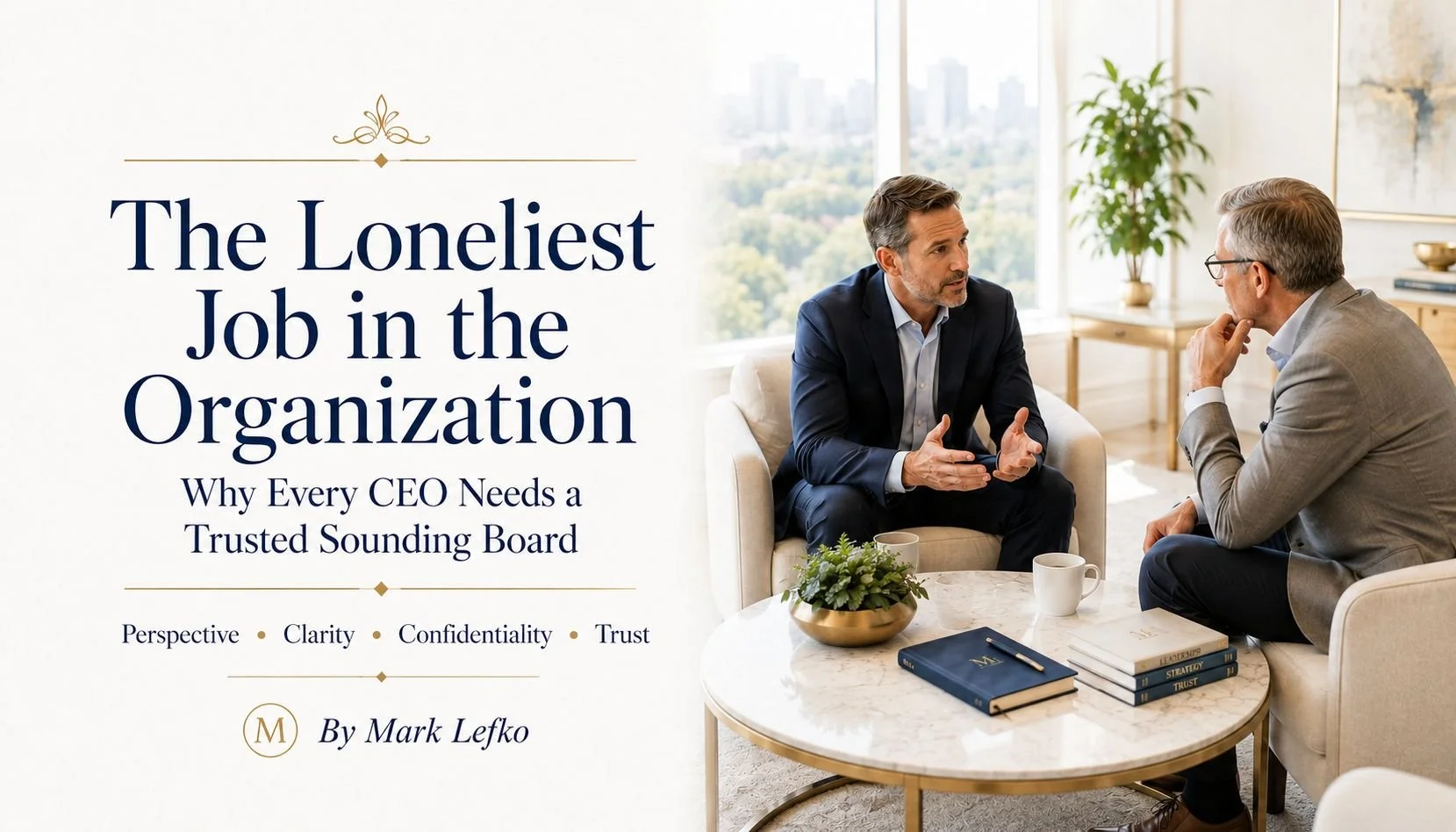
People often assume that becoming a CEO means gaining more influence, more authority, and more control. In many ways, that is true. What gets discussed less often is what CEOs lose.
As leaders move higher within an organization, the number of people they can speak openly with often becomes smaller. The higher the role, the fewer truly candid conversations become available. This is one of the realities many leaders discover only after stepping into the role: leadership can be surprisingly lonely.
The Weight of Responsibility
Every day, CEOs make decisions that affect employees, customers, shareholders, business partners, and communities. Many of those decisions involve real uncertainty. There is rarely a complete set of facts, rarely a perfect answer, and often competing priorities. Every option may carry both risk and opportunity. The CEO is expected to make the decision anyway.
That responsibility can be heavy — particularly during periods of growth, organizational change, economic uncertainty, or leadership transition. Most employees see the position. Few see the burden.
The Challenge of Speaking Freely
One of the greatest challenges CEOs face is determining who they can talk to openly. Executive Leadership Team members offer valuable perspectives, but there are issues a CEO may not be ready to discuss internally. Board members can provide guidance, but their role is different. Friends and family offer support, but they may not understand the full complexity of the situation.
The result is that many CEOs carry important questions longer than they should — not because they lack answers, but because they lack a safe place to think through them.
Every Leader Has Blind Spots
One of the greatest risks facing successful leaders is not incompetence. It is isolation. The longer leaders operate without objective feedback, the easier it becomes to develop blind spots. We all have them, no matter how experienced, intelligent, or successful we may be. The challenge is that we rarely see our own.
That is why perspective matters. A trusted sounding board creates space to explore ideas, challenge assumptions, and consider alternatives before important decisions are made — not to tell a CEO what to do, but to help them think more clearly.
Sometimes the Greatest Value Is the Question
Many people assume advisors create value by providing answers. In my experience, the greatest value often comes from asking the right questions:
What assumptions are we making?
What might we be overlooking?
What are the unintended consequences?
What would success look like?
What conversation are we avoiding?
What would you advise someone else to do in this situation?
Good questions create clarity. Clarity often leads to better decisions. Better decisions frequently lead to better outcomes.
Leadership Does Not Have to Be a Solo Sport
Many CEOs feel pressure to project confidence and certainty. That comes with the role. But confidence should not be confused with isolation.
Some of the most effective CEOs I have worked with over the years actively seek perspective. They understand that leadership is not weakened by asking for input — it is strengthened by it. They recognize that wisdom often emerges through thoughtful conversation rather than solitary reflection alone.
The strongest leaders are rarely the ones who attempt to carry every burden themselves. They are the ones who know when to seek perspective from people they trust.
The Value of a Confidential Sounding Board
A trusted sounding board provides something increasingly rare for senior leaders: a confidential place to think. No agenda. No politics. No organizational hierarchy. No need to have all the answers. Just an opportunity to explore issues honestly and thoughtfully.
The objective is not to make decisions for the CEO. It is to help the CEO make better decisions for themselves and their organization.
Sometimes the conversation lasts ten minutes. Sometimes it lasts several months. Either way, the value comes from creating space for reflection and clarity.
The Bottom Line
Being a CEO can be one of the most rewarding roles in an organization. It can also be one of the loneliest. The responsibility is significant. The decisions are consequential. The pressure is real.
No leader should have to carry those responsibilities entirely alone. The most effective CEOs I have worked with understand that seeking perspective is not a sign of weakness — it is a sign of wisdom.
Leadership will always involve difficult decisions. The goal is not to eliminate the burden. The goal is to ensure you do not carry it alone.
Because sometimes the most valuable thing a CEO can have is not another answer. It is a trusted conversation.
RELATED READING
For a perspective on what happens when a new CEO joins an existing team during the critical first months, see “The First 90 Days: Integrating a New CEO with an Existing Executive Leadership Team.”
